English Seafood Vocabulary for Kids
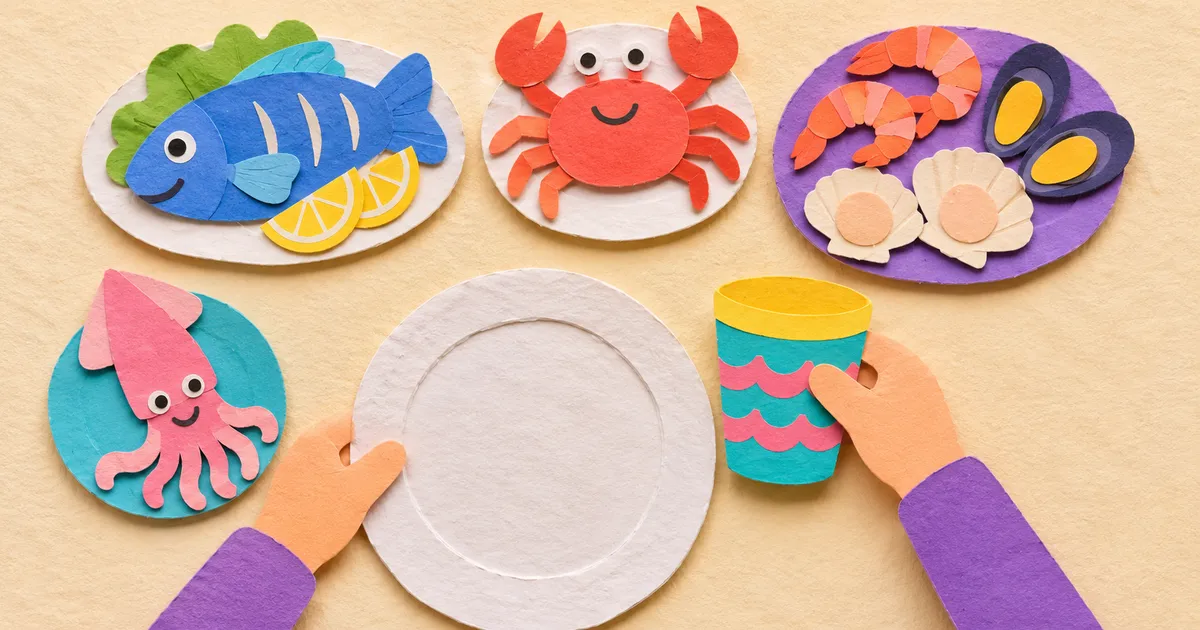
Seafood vocabulary covers English words for fish, shellfish, dishes, and descriptions. English Seafood Vocabulary for Kids: Words and Activities gives children names and sentence patterns for meals, shops, menus, and conversations. Start with pictures, then add phrases such as “I like tuna,” “Is this cooked?” and “We need fish.” Children can learn without eating seafood. Photos, toy food, drawings, menus, and matching games provide context for practice.
📥 Seafood Vocabulary Practice
A printable activity sheet for learning seafood words and phrases
Leave your email — we'll send the PDF to your inbox.No spam — the PDF plus one short reminder. Unsubscribe anytime.
Core Seafood Words and Phrases
Start with names: salmon, tuna, cod, sardine, shrimp, prawn, crab, lobster, mussel, oyster, clam, scallop, squid, and octopus. Add the group words fish, shellfish, and seafood. Children may know these foods or meet them only in books and menus.
English Seafood Vocabulary for Kids: Words and Activities should include descriptive words: fresh, frozen, raw, cooked, grilled, baked, salty, soft, and spicy. Teach visible features first.
Pair each noun with a phrase: “some salmon,” “a crab,” “two oysters,” or “grilled fish.” Then build sentences: “The crab has two claws,” “I have never tried mussels,” and “Please pass the fish.” Sentences give each word a purpose.
Sorting Fish, Shellfish, and Dishes
Children may call every sea animal a fish. A comparison shows how everyday English groups the words. Shellfish includes animals such as crabs, shrimp, mussels, and oysters; seafood is the broad food term.
Shrimp and prawn vary by country and context. British English often uses fish fingers; American English uses fish sticks. Teaching both forms helps children understand menus, videos, and conversations.
Seafood Words in Everyday Context
English Seafood Vocabulary for Kids: Words and Activities becomes memorable when each word serves a purpose. At a shop, practise “Do you have fresh fish?” and “We need prawns.” At home, try “The salmon is in the oven” or “This soup contains crab.”
In a restaurant role-play, one person reads a menu while another takes the order. Try “What comes with the grilled fish?”, “I would like the seafood pasta,” and “Does this dish contain shellfish?” Older children can request changes: “Could I have rice instead of chips?”
Keep the topic and switch the grammar. Use statements, questions, and negatives with one word: “She likes tuna,” “Does she like tuna?” and “She does not like tuna.” This revises familiar grammar without adding a new setting or a large noun group.
Activities for Different Ages
For school-age kids, use four to six picture cards at a time. Say a word and ask your child to point, match, or place the card in a fish or shellfish group. Then add movement: walk sideways like a crab or open and close hands like a clam.
For school-age kids, make a small menu with pictures and prices written as classroom numbers, not real costs. Children can circle a dish, order it, and explain one choice: “I chose grilled fish because it looks good.” A memory game can pair each seafood picture with its written name.
For school-age kids, English Seafood Vocabulary for Kids: Words and Activities can cover recipe steps, menu comparisons, and short research tasks. Learners can compare two dishes, identify cooking verbs, or write a three-line review. Keep cultural choices open: the goal is English practice, not persuading anyone to eat a food.
Simple Ways to Practise
Keep sessions brief. Use English Seafood Vocabulary for Kids: Words and Activities across the week: match words and pictures on the first day, sort words on the second, then build questions, describe a dish, or act out a shop conversation. Revisiting the words through varied tasks strengthens recall without creating one long test.
Build a Seafood Plate
Draw a plate and choose one seafood item, one side dish, and one sauce. Label each part, then say three sentences: “My plate has grilled salmon. It comes with rice. The sauce is not spicy.”
LearnLink tutors can adapt the word set to each child’s age and speaking level. A beginner may point and name. A confident learner can compare, explain, and ask follow-up questions. The subject remains familiar while the language task grows harder.
Common Mistakes to Correct Gently
Seafood is usually uncountable. Say “some seafood” or “a seafood dish,” not “a seafood.” Fish usually has the same singular and plural form for food or multiple animals: “one fish” and “three fish.” Fishes mainly refers to different species.
Children may confuse shrimp and prawn because regional usage differs. Accept the local word, then teach the other variant. For octopus, use octopuses as the everyday plural. Squid often remains squid in the plural: “one squid” and “two squid.”
Do not turn vocabulary practice into a tasting test. A child may avoid seafood because of family custom, preference, diet, or allergy. Pictures and pretend menus teach the English safely. If an activity uses food, an adult must check ingredients and allergy requirements first.
- Model the correct word once, then invite your child to repeat it.
- Sort six picture cards into fish, shellfish, and other seafood groups.
- Read one seafood picture book and point to three named foods.
- Recast mistakes gently by repeating the sentence with the correct seafood word.
- Praise the attempt, then ask one simple question using the corrected word.
When a word has several meanings or pronunciations, Cambridge Dictionary is a useful check before turning it into child-friendly examples.
Frequently Asked Questions About Seafood Words
How Many Seafood Words Should My Child Learn at Once?
Start with six to eight words and review them through varied tasks. English Seafood Vocabulary for Kids: Words and Activities works best as short lessons, not one long test. When your child recognises the words and uses two or three in sentences, add another group. Younger learners may need fewer words; older learners can add cooking verbs and descriptions.
Should My Child Learn Shrimp or Prawn?
Teach the word used in your child’s school materials or local English course, then introduce the other form. Both shrimp and prawn appear in international English, with usage varying between countries. Children need no complex biological explanation. The note “You may see both words on menus” is enough for most learners.
Can We Practise Seafood Vocabulary Without Eating Seafood?
Yes. Use picture cards, drawings, toy food, supermarket leaflets, recipe photos, or an invented restaurant menu. Your child can sort words, take an order, describe a dish, or write a shopping list without handling food. Picture-based lessons suit children with allergies, dietary limits, strong preferences, or little seafood experience.
What If Our Family Does Not Eat Seafood?
Treat the words as general language knowledge. Your child may encounter them in stories, school texts, travel, shops, or cross-cultural conversations. If relevant, explain your family’s choice in English: “We do not eat shellfish” or “Our family chooses other foods.” The lesson can support communication while respecting family values and customs.
Try this three-step plan: choose six words, practise for five minutes a day, and ask your child to use three words in a menu, shop, or meal conversation by week’s end.
A short one-to-one lesson can show what level and pace fit your child — book a trial English lesson.
Stay updated on our latest tips and resources by following us on Instagram LearnLink.